
Since 1 December 2025, tenants have had the right to ask to keep a pet, and landlords can only say no on reasonable grounds. It’s a big shift for rental properties and by law, most landlords will end up having to say yes to pets more often than not. Against this backdrop, it is important that landlords review their rental property insurance to make sure it is fit for purpose.
Under the Residential Tenancies Amendment Act 2024, landlords can no longer apply a blanket “no pets” clause. Tenants have the right to request a pet, and landlords can only decline in specific situations, such as when the property is not suitable or the pet poses a health or safety risk.
To help offset the risk, landlords can charge a pet bond of up to two weeks’ rent on top of the standard four‑week bond, and tenants are fully liable for careless or accidental pet damage beyond fair wear and tear.
On paper, that sounds like reasonable protection but in practice, it doesn’t always translate into landlords being fully covered.
A pet bond and tenant liability are a good start, but they have real limits:
For example, incidents such as pet urine damage in a hallway, lounge and three bedrooms could trigger five separate excesses. Many landlords have excesses around the $1,000 mark, which could mean a $5,000 bill.
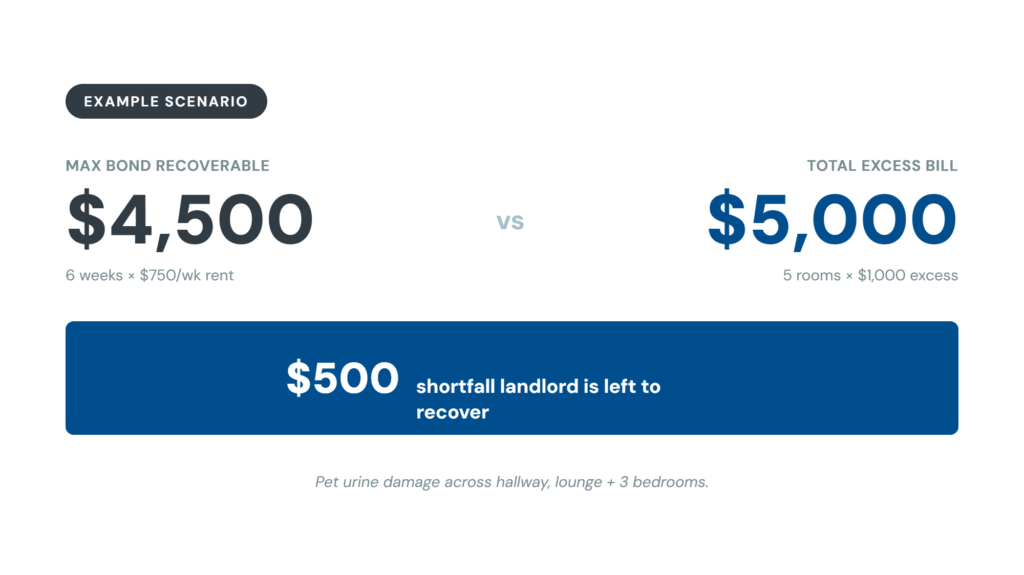
Even with the new six-week maximum bond, a landlord receiving $750 a week could only collect $4,500, leaving a shortfall that would have to be pursued and recovered through the tenancy tribunal taking additional time and creating further expense. At the same time, pet damage can also lead to periods of vacancy while repairs or re-carpeting are completed. Without the right loss of rent cover in place, these downtime costs can fall entirely on the landlord, adding another layer of financial exposure.
Not all landlord policies treat pets the same way, and pet-related cover is rarely included by default. Pet-related cover can also be limited and costly. Most standard landlord insurance policies do not automatically cover pet-related damage if the damage is gradual (for example, ongoing urine damage to flooring), cumulative (such as scratches to wooden floors), or occurs over time.
In light of this, the key is being aware of what your policy does – or does not – cover so that you can make an informed decision.
The most common mistakes we see landlords make are:
To avoid any nasty surprises, our advisers can help you review your policy to check for things such as:
Every landlord’s tolerance for risk is different. Some are happy to manage smaller issues themselves; others would rather pay a bit more for comprehensive cover and fewer surprises.
As pets become a more common part of tenancy agreements, it’s worth making sure your policy reflects which camp you’re in.
The best time to find out what your policy actually covers is before something goes wrong, not after.
Our advisers can walk through your current cover, flag any gaps around pets, rent or damage, and help you choose extensions that suit your property and your appetite for risk. Not only that, but if you do need to claim our team will help you manage the process, prepare documentation, and advocate with your insurer on your behalf. No 0800 queues, no navigating the process alone. Just a trusted adviser handling it with you, every step of the way.
If you are interested in having our team review your landlord policy to ensure it is fit for purpose, get in touch with the team at Threefold for a no-obligation review today by clicking here.
The content of this article should not be taken as financial advice, or a recommendation of any financial product. These insights are based on current economic commentary, market pricing for interest rates, and our personal opinion. Threefold is not liable or responsible for any information, omissions, or errors present.